Tangential flow fans are one of the most specialized types of industrial motors, producing unique flow patterns. And by generating tangential flow along the vessel wall, these fans are an ideal solution for shear sensitive applications. This article will analyze the principles of its operation, advantages, design and industrial applications.

What is a motive with apparent flow?
A tangential flow impeller is an industrial motor with the following characteristics:
-
The fluid flow is directed parallel to the tank wall.
-
Generates low shear stress
-
Suitable for shear-sensitive fluids (cells, polymers, proteins)
-
Produces a concentrated vortex flow pattern
The main types of tangential fans
-
Anchor impeller
-
Near the wall of the reservoir
-
Suitable for liquids with high viscosity.
-
-
Spiral belt motor
-
Spiral design
-
Excellent performance in non-Newtonian liquids
-
-
Gate fan
-
Simple structure
-
Low power consumption
-
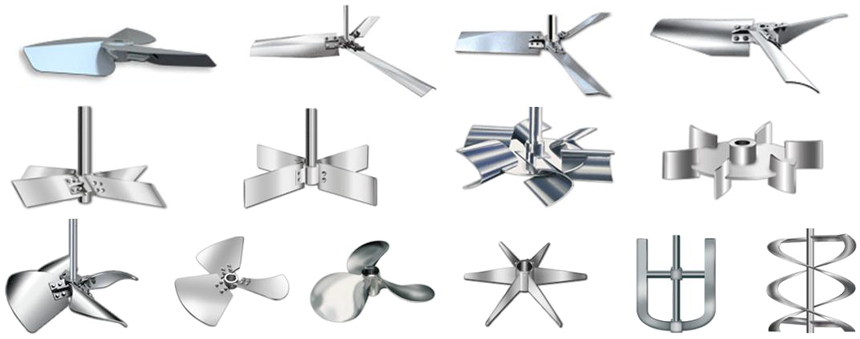 Mechanism of operation and design
Principle of operation
-
The rotation of the impeller moves the liquid along the perimeter of the tank.
-
The primary flow is generated in the tangential direction and the secondary flow is generated in the vertical direction.
-
Apply controlled centrifugal force.
Main design parameters
| range | Optimal range | Impact on performance |
|---|---|---|
| Diameter ratio (D/T) | 0.7-0.9 | Increased heat transfer |
| speed | 10-100rpm | Shear stress control |
| Snail angle | 30-45 degrees | Improved vertical flow |
| Distance from wall | 5-10% of tank diameter | Rainfall prevention |
Unique Features
-
Minimum shear strength compared to other types
-
Homogeneous and homogeneous without destroying the molecular structure.
-
Efficient heat transfer during heating/cooling
-
Flow stability at different viscosities
-
Prevents deposition on the walls of the tank.
Professional Applications
1. Biotechnology and pharmaceutical industries
-
Cell culture and fermentation
-
Production of vaccines and antibiotics
-
A combination of biologically sensitive substances
2. Polymer and resin industry
-
Production of composite materials
-
Hybrid thermoplastic materials
-
Rubber and elastomer treatment
3. Food industry
-
Production of chocolate and cocoa
-
Thick pasta processing
-
Preparation of emulsified sauce
4. Chemical industry
-
Production of paints and coatings
-
Polymerase process
-
Mixed adhesive
How to choose and calculate
Criterias of choice
-
Sensitivity of materials to sternal stress
-
Rheological properties of liquids
-
Tank size and geometry
-
Heat transfer requirements
Main formula
-
Capacity(Po) :
P/(ρN³D⁵) -
Reynolds Number (Re) :
(ρND²)/μ -
Pumping capacity (Q) :
kND³(coefficient k between 0.5-1.2)
Challenges and practical solutions
Frequently asked questions
-
Not mixing enough in the center of the tank
-
Very high viscosity and high energy consumption.
-
Corrosion in aggressive chemical environments
Optimization Solutions
-
Use of the composite fan (tangential-vertical)
-
Install vertical barriers to optimize flow
-
Choose corrosion-resistant materials, such as Hastelloy or Teflon paint.
Performance comparison table
| feature | Tangential flow | Radial flow | Axial flow |
|---|---|---|---|
| Shear stress | Odd | Top | half |
| Applicable viscosity | Top | Low to medium | A little |
| Heat transfer | Excellent | half | Weak |
| Power consumption | Medium to High | Top | A little |
Maintenance & Operation
-
Check the distance between the payer and the wall every month
-
Periodic fan balancing control
-
Lubricate bearings periodically
-
Removal of sediment from the surface of the impeller
Conclusion
Tangential flow fans occupy a special place in advanced industrial applications thanks to their unique ability to handle sensitive materials. The careful selection of these fans, based on process conditions and fluid properties, can improve product quality and reduce production costs.
Frequently asked questions
1. What is the main difference between tangential impulse and radial impulse?
Tangential fans generate less cut and are more suitable for sensitive materials, while radial fans have greater mixing strength.
2. Can these impellers be used for liquids with low viscosity?
Yes, but they may require adjustments in rotation speed and special designs.
3. What is the life expectancy of these butterflies?
From 5 to 10 years depending on the type of butterfly and working conditions.
4. What are the most important design criteria for these fans?
-
ISO 2858 Dimensions and Tolerances
-
ASME BPE for Pharmaceutical and Food Industries