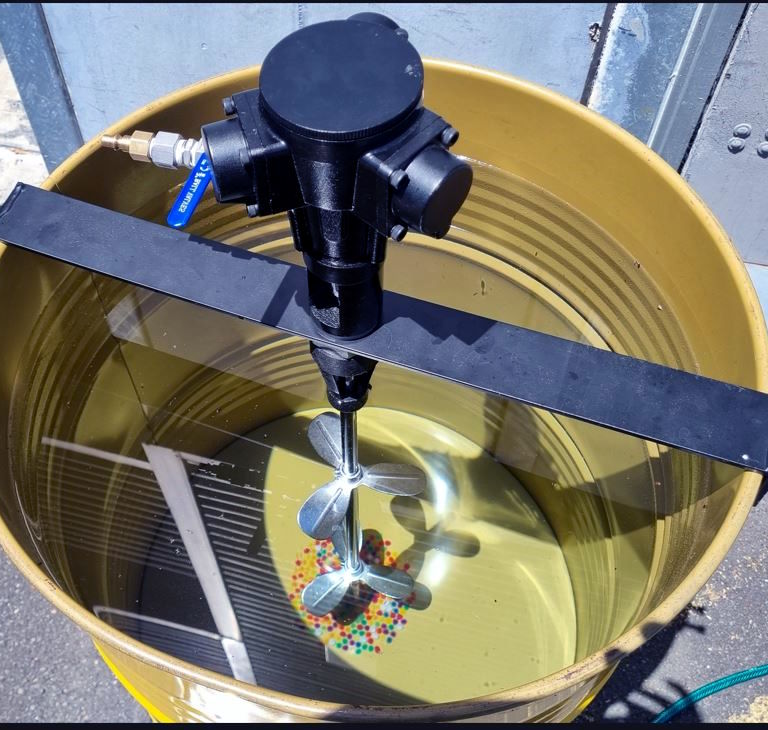
This series of air motors is small and lightweight, suitable for small mixing operations and manual operation.
Compressed air is an excellent source of energy for mixing equipment. Therefore, these vented mixers are completely safe when working in environments with high solvent concentrations.
Dynamic mixers (mobile agitators) are indispensable in various industries, such as food, chemical, pharmaceutical, paints and coatings and resin production. They are used for mixing, homogenizing and dispersing materials of different viscosities. An important factor to consider when choosing a dynamic mixer is the type of motor. Pneumatic (compressed air) and electric motors are common motors. In this article, we’ll look at pneumatic dynamic mixers and their advantages over electric motors.
What is a pneumatic dynamic motor?
Aerodynamic actuators use compressed air to drive and rotate the impeller. The system consists of a pneumatic actuator that controls torque and speed using compressed air. This actuator is often used in environments where the use of electric motors is difficult or dangerous.
Advantages of Dynamic Pneumatic Mixer
The use of a pneumatic system in a dynamic mixer offers a number of advantages that make it the ideal choice for certain applications. The main advantages of this system are:
1. Safety in Explosive and Hazardous Environments
One of the most important advantages of air movement is its safety in explosive or flammable gas environments. Unlike electric motors, which can generate sparks, pneumatic motors do not generate sparks. This feature makes aerodynamic mixers ideal for use in the chemical, petroleum and pharmaceutical industries where hazardous substances are handled.
2. Resistant to harsh environmental conditions.
Pneumatic motors are more resistant to moisture, dust and chemicals. This makes pneumatic mixers more suitable for use in wet or dirty environments where electric motors can fail or affect their performance.
3. No cooling system required.
Pneumatic motors generate less heat because they use compressed air and do not require complex cooling systems. This reduces maintenance costs and extends the life of the equipment. In contrast, electric motors generate a significant amount of heat during operation and require a cooling system.
4. Simple and flexible control
Pneumatic motors can be easily controlled via pneumatic control valves. These systems enable precise control of speed and torque. In addition, there is no need for additional equipment such as inverters (as required by electric motors) during speed changes .
5. Lighter weight and compact design.
Aerodynamic motors are lighter than electric motors. This makes them lighter and more portable. In addition, its compact design makes it easy to install and transport.
6. Reduction of maintenance costs
Pneumatic motors have a simpler design than electric motors and contain fewer wearing parts. This reduces maintenance costs. In addition, pneumatic motors do not require constant lubrication.
7. High heat resistance
Pneumatic motors operate easily at high temperatures (up to 100 °C). This property is especially useful in industries where hot materials are used. Electric motors, on the other hand, can overheat at high temperatures.
8. Not affected by energy fluctuations.
Pneumatic motors are independent of the power supply, so their performance is not affected by fluctuations or interruptions in the power supply. This increases the reliability of the system under difficult electrical conditions.
Comparison of pneumatic and electric motors
Although pneumatic motors offer many advantages, in some cases electric motors are preferable. Below we compare the two systems:
1. Acquisition costs and operating costs
- Pneumatically driven: The initial cost is usually lower, but the operating costs (e.g. compressed air consumption) can be higher.
- Electric motors: The initial cost may be higher, but the operating costs (electricity consumption) are generally lower.
2. Energy efficiency
- Draught: Energy efficiency is low due to electrolytic losses during the conversion of electrical energy into compressed air .
- Electric motors: Provide greater energy efficiency, especially when using an inverter for speed control.
3. Speed adjustment
- Pneumatic motor: The speed adjustment is simple, but the accuracy is not as high as an electric motor.
- Motor: Thanks to the frequency converter , speed control is precise and flexible.
4. Environment
- Pneumatic motor: suitable for use in hazardous, wet or hot conditions.
- Electric motors: More suitable for clean and controlled conditions.
At last
Aerodynamic mixers are ideal for hazardous, humid and hot environments. In some cases, these systems are a suitable alternative to electric motors , offering benefits such as increased safety, resistance to harsh conditions, lower maintenance costs, and ease of control. However, the choice between a pneumatic drive system and an electric motor depends on the requirements of the project, environmental conditions and operating costs. Ultimately, the use of aerodynamic mixers in numerous industries contributes to increased productivity, safety and cost reduction.
The shaft and impeller are made of 304/316 stainless steel.
High performance and long service life.
| Product | DP-1HF | DB-1HL |
| Reduce Translation | 1:1 | 1:1 |
| Power (hp) | 0.026 (19 W) | 0.026 (19 W) |
| Motor torque (Nm) | 0,15 | 0,15 |
| H/min | 1200 | 1200 |
| Luftstrom (l/min) | 40 | 40 |
| Size of the air inlet | G1/8 | G1/8 |
| Column material and size | SUS304/316 8×380 | SUS304/316 8×380 |
| Blade material and size | SUS304/316 | SUS304/316 |
| Weight (kg) | 23 | 2.5 |
| Case size (mm) | 570 x 170 x 30 | 570 x 170 x 30 |
| Product | DP-AM2L | DP-AM2R | DP-AM2SC |
| Reduce Translation | 1:1 | 1:1 | 1:1 |
| Power (hp) | 0.16 (0.12 kW) | 0.16 (0.12 kW) | 0.16 (0.12 kW) |
| Motor torque (Nm) | 0,95 | 0,95 | 0,95 |
| H/min | 1200 | 1200 | 1200 |
| Luftstrom (l/min) | 210 | 210 | 210 |
| Size of the air inlet | G1/8 | G1/8 | G1/4 |
| Column material and size | SUS304/316 12×440 | SUS304/316 12×440 | SUS304/316 12×440 |
| Blade material and size | SUS304/316/Aluminum Alloy/Nylon | SUS304/316/Aluminum Alloy/Nylon | SUS304/316/Aluminum Alloy/Nylon |
| Weight (kg) | 3.5 | 4.5 | 3.6 |
| Case size (mm) | 620 x 200 x 165 | 620 x 200 x 165 | 840x150x165 |
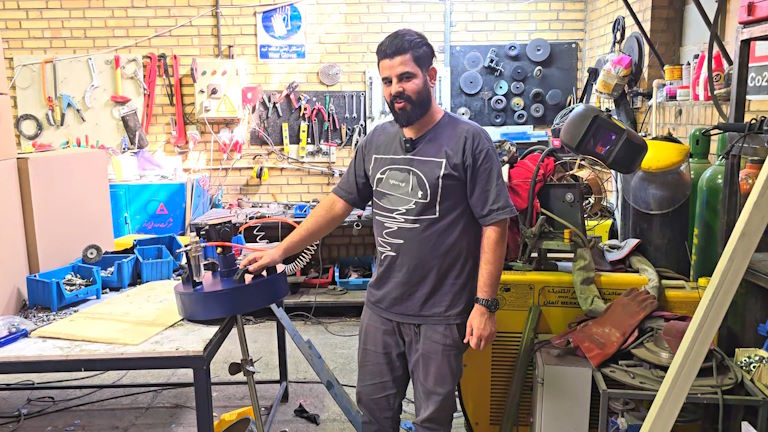
Pneumatic motor (air motor).
Fan motors from HD Process suppliers. Useful in environments that require fire resistance.
It can be used for mixing in small tanks, 200-liter drums, and medium-sized containers.
The speed of these units can be easily adjusted with a small valve. The main unit for a 200-liter cylinder weighs about 6.5 kg.